
Where DSOs Are Losing Time, Revenue, and Efficiency
The true cost and opportunity of modern dental IT isn’t always visible.
Based on Thinc Forward’s analysis of 10,000+ deployments across DSOs and multi-location practices, here’s where organizations are losing time and revenue—and how to recover it.
1. System Inconsistency Is Creating Hidden Revenue Loss
What’s happening:
Different PMS platforms, imaging systems, and infrastructure across locations create friction in daily workflows.
Where time is lost:
Staff navigate inconsistencies, slower systems, and workarounds that add time to every patient interaction.
What it’s costing:
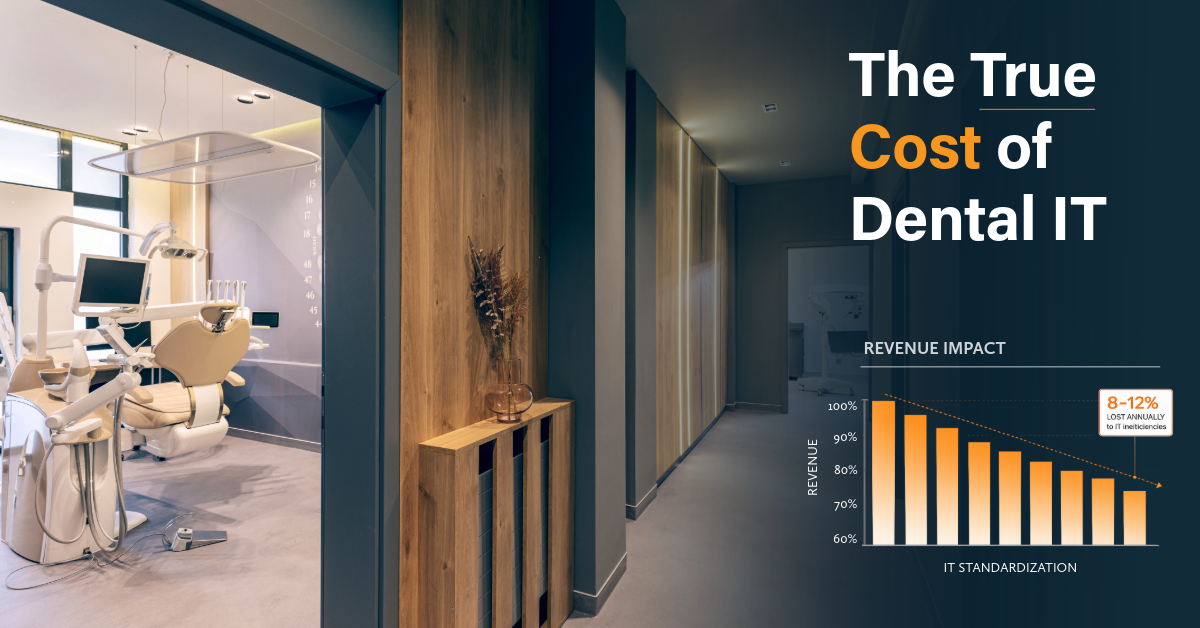
- 8%–12% of annual revenue lost to IT inefficiencies
- Increased staff frustration and burnout from unreliable systems
How to recover it:
Standardizing systems across locations reduces friction, improves performance, and recaptures lost production time.
2. Network Fragmentation Is Driving Downtime
What’s happening:
Each location runs a different network stack: firewalls, switches, Wi-Fi, and ISPs.
Where time is lost:
Issues take longer to troubleshoot and resolve, leading to recurring slowdowns and outages.
What it’s costing:
- Up to a 40% increase in support tickets
- An additional 60 minutes or more of downtime per office, per week
How to recover it:
Standardizing network infrastructure reduces variability, speeds up support, and improves uptime.
3. Imaging Inefficiencies Are Slowing Clinical Productivity
What’s happening:
Imaging and PMS systems aren’t fully aligned, especially after migrations.
Where time is lost:
Lagging systems, failed captures, and retakes disrupt clinical flow and extend chair time.
What it’s costing:
- Diagnostic efficiency drops by 20–30%
- Up to 23% more retakes
How to recover it:
Properly configured and validated imaging integrations improve speed, accuracy, and overall clinical productivity.
4. Inefficient Access Is Wasting Staff Time
What’s happening:
Fragmented domains and outdated access methods slow down onboarding and user management.
Where time is lost:
Manual provisioning, troubleshooting access, and inconsistent permissions across locations.
What it’s costing:
- 3–5 hours per onboarding event
- Increased exposure to security and compliance risks
How to recover it:
A single, unified Azure environment reduces onboarding time to under 30 minutes while eliminating up to 90% of legacy VPN/RDP vulnerabilities and reducing HIPAA compliance risk.
5. Decentralized IT Oversight Is Increasing Risk
What’s happening:
Patching, monitoring, and backups vary across locations without centralized governance.
Where time is lost:
Slower response and recovery when issues or cyber events occur.
What it’s costing:
- 83% more critical incidents (compared to centralized environments)
- Up to 7x longer recovery times
How to recover it:
Centralized IT governance and PMS systems (patching, SOC monitoring, cloud backups, and EDR) create consistency across locations, enabling faster response and more reliable recovery.
The Bottom Line
These aren’t isolated issues, they scale across every location, operatory, and patient interaction.
This results in lost time, lost production, and avoidable costs.
Most of it is recoverable with the right IT strategy.
Want to see where your organization is losing time and revenue?We’ll walk through your environment and identify the gaps, no guesswork, just clear next steps.
→ Schedule an assessment