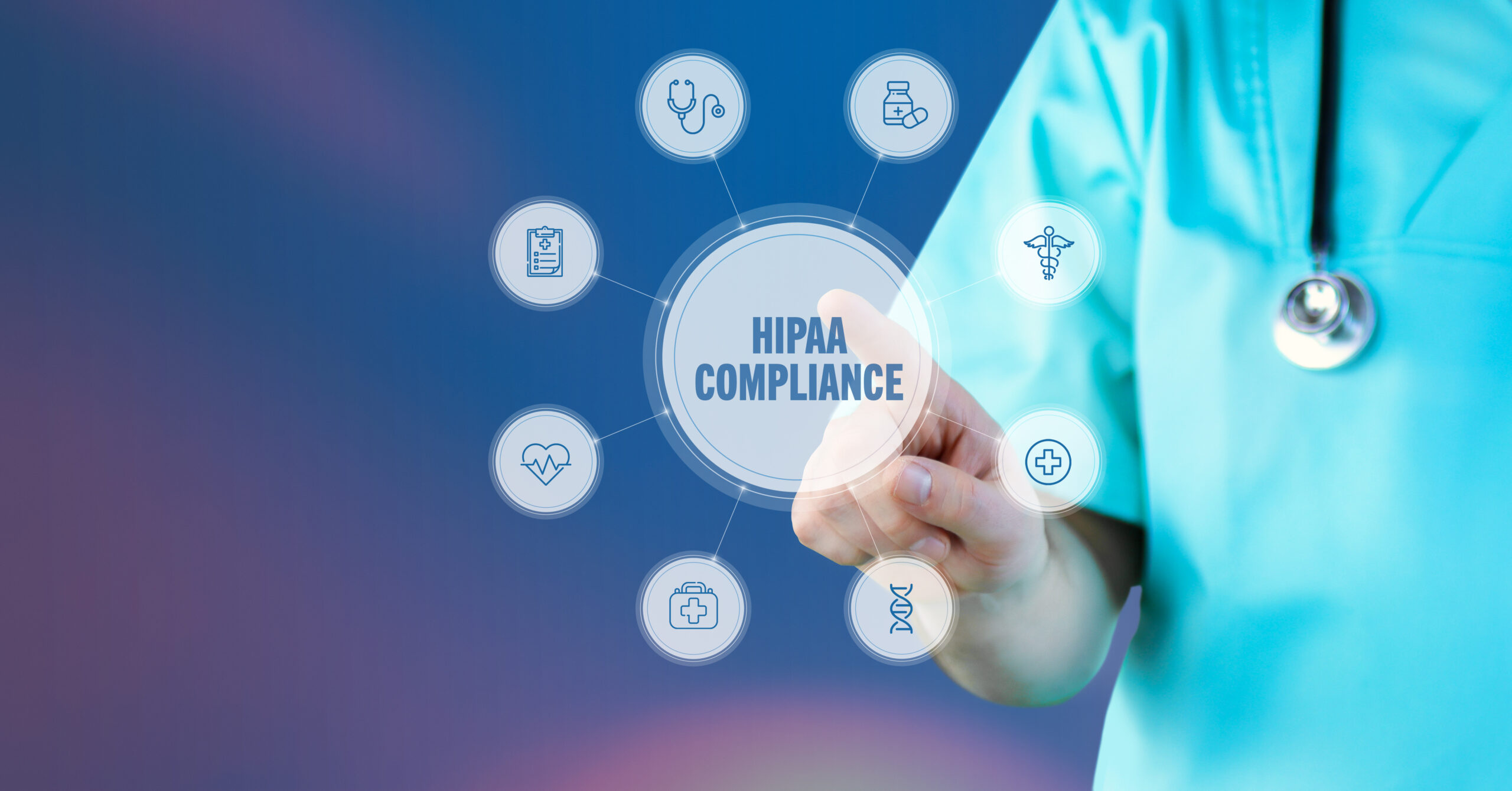

HIPAA Compliance at Scale: How DSOs Can Protect Patient Data and Support Growth

HIPAA Compliance at Scale: How DSOs Can Protect Patient Data and Support Growth

As Dental Service Organizations (DSOs) expand, protecting patient health information becomes more complex. Each new location, provider, and vendor adds risk—not because teams aren’t trying, but because compliance systems built for smaller practices don’t easily scale.

HIPAA compliance is often seen as a straightforward process, but for DSOs, it needs to be a strategic foundation. It’s about building patient trust, reducing risk across your network, and positioning your organization for sustainable growth.

The Challenges of HIPAA Compliance for Growing DSOs

HIPAA was designed to protect patient data but wasn’t created with multi-site dental organizations in mind. As DSOs grow, they inherit different systems, processes, and vendors, each carrying unique risks. Common issues include inconsistent staff training, missing or outdated Business Associate Agreements (BAAs), no centralized monitoring of electronic protected health information (ePHI), fragmented policies by location, and unclear breach response protocols. Compliance often happens in silos, with no shared risk perspective.

At the same time, HIPAA enforcement is becoming stricter. Regulators expect DSOs to do more than the bare minimum and hold them accountable for their vendors, partners, and employees. Beyond fines, breaches can damage reputation, cause patient distrust, trigger lawsuits, and delay growth opportunities. Reactive compliance only increases these risks and costs.

Building a Scalable HIPAA Compliance Framework

To meet these challenges, DSOs need a compliance approach that grows with their organization. This means shifting from fragmented efforts to coordinated, strategic action. Here are six key steps:

  • Standardize Policies Across Locations
    Create a centralized set of HIPAA policies that all offices follow. While local workflows can be adapted, core standards around training, access, breach response, and documentation must be consistent.
  • Centralize Risk Management
    Conduct regular risk assessments across your entire network, not just per location. Use tools to track vulnerabilities, remediation, and progress over time.
  • Automate Compliance Tasks
    Manual processes don’t scale well. Automate training reminders, access reviews, policy acknowledgments, and documentation tracking to save time and reduce errors.
  • Manage Vendor Risk with Business Associate Agreements (BAAs)
    A BAA is a legal contract between your DSO and any vendor or partner handling protected health information (PHI). It outlines their responsibilities to protect PHI, limits how they can use it, and requires timely breach notifications. Without signed, current BAAs, your organization could be liable for vendor compliance failures. Managing BAAs carefully is critical to reducing network-wide risk.
  • Strengthen Breach Detection and Response
    Develop clear protocols for identifying and responding to breaches. Regularly test these plans through drills and reviews to ensure your team is prepared.
  • Leverage Compliance as a Competitive Advantage
    Embed HIPAA compliance into your culture to build patient trust and differentiate your DSO. Compliance is not just about avoiding penalties—it’s about improving efficiency and supporting growth confidently.

Why a Strategic Approach Matters

By taking a proactive, strategic approach to HIPAA compliance, DSOs can move beyond simply checking boxes. Instead, they create a unified, scalable system that protects patient data, supports business growth, and builds lasting trust with patients and partners. The right framework reduces risk, improves operational efficiency, and positions your organization to thrive—even as it grows more complex.

At Thinc Forward, we specialize in helping DSOs build scalable compliance programs that protect patient data and enable growth. Download our checklist below for clear guidance to help you track progress and document your HIPAA compliance efforts.

Download the HIPAA Compliance Checklist

From Inbox to Intrusion: The Rising Threat of Email Cybersecurity 

From Inbox to Intrusion: The Rising Threat of Email Cybersecurity 


As businesses rely more heavily on digital communication, email has become one of the most common—and dangerous—ways for cybercriminals to gain access. What was once just a tool for internal collaboration and external outreach is now a primary target for increasingly sophisticated attacks. To stay protected, companies need more than basic email filters. They also need a modern, strategic approach to cybersecurity that can keep up with today’s evolving threats. 

Email has become one of the most exploited tools in the cybercriminal’s toolkit. Why? Because it’s universally used and often trusted. While employees focus on getting work done, attackers are focused on getting in—through lookalike domains, fake login pages, and impersonation tactics designed to trick even the most cautious user. 
 

One recent incident illustrates just how easily trust can be exploited. In May 2025, scammers spoofed Indiana state government agencies by exploiting a former vendor’s email system. Messages appeared to alert recipients of unpaid tolls or suspicious PayPal activity—tricking individuals into clicking malicious links. It was a textbook case of exploiting trust and overlooked third-party access. 
 

And it’s not just public agencies that are vulnerable. Small and midsize businesses are often the most at risk due to limited resources and aging security infrastructure. 

Gone are the days of cartoonish phishing scams. Today’s email attacks are polished and engineered to slip past traditional filters. Common tactics include: 

  • Impersonating known vendors or internal staff 
  • Delivering highly targeted spear-phishing emails 
  • Embedding malicious links or attachments in what appear to be routine messages 
     

Take, for example, a high-profile breach in the healthcare industry. In February 2024, Change Healthcare, one of the largest healthcare tech firms in the U.S., suffered a breach after attackers harvested login credentials via a phishing campaign. The compromise led to widespread disruptions across billing and claims processing—affecting providers, insurers, and millions of patients. 
 

And attackers are getting even smarter. We’re also seeing a rise in AI-enhanced phishing. Attackers are now using AI to generate highly realistic emails—free of the usual spelling and formatting errors. These messages often spoof internal conversations, reference real events, and insert themselves into ongoing threads, making them incredibly difficult for users to identify as threats. 
 

These aren’t just technical threats, they’re social engineering attacks designed to manipulate behavior. As attackers evolve, the tools used to stop them must evolve faster. That’s why today’s email defenses need to be as smart—and as adaptive—as the threats they face. 

Legacy email filters are often good at catching obvious spam, but they’re not built to recognize emerging threats or subtle manipulation. Most operate on static rules or threat signatures, which means if the attack hasn’t been seen before, it’s more likely to get through. 
 

Modern threats require modern defenses—solutions that use context, behavioral analysis, and real-time detection to flag potentially dangerous emails that otherwise look legitimate. 

At Thinc Forward, we help organizations move from reactive to proactive when it comes to email security. That means going beyond basic protection and implementing smart tools and strategies that: 

  • Analyze sender behavior and domain authenticity 
  • Provide visual warnings to users in real time 
  • Identify anomalies that signal impersonation attempts 
  • Help security teams respond quickly and decisively 
     

More importantly, these solutions are designed to work behind the scenes—enhancing security without slowing down productivity. They’re a key part of the layered cybersecurity approach we recommend to ensure comprehensive protection. 

Email will always be central to how business gets done—but it shouldn’t be your biggest risk. With a modern, intelligent approach to email security, your organization can protect its people, data, and reputation while building a stronger foundation for growth. 
 

Ready to take the first step? Contact us to learn how Thinc Forward can help you strengthen your defenses—starting with your inbox. 

From Cost Center to Competitive Advantage: Leveraging Enhanced Contact Center Capabilities to Drive Growth

From Cost Center to Competitive Advantage: Leveraging Enhanced Contact Center Capabilities to Drive Growth

iBusinesses today are under constant pressure to innovate, stay competitive, and deliver great customer experiences. Historically, contact centers were often viewed as cost centers—necessary but not integral to an organization’s overall strategy. However, as technology has evolved, so has the role of the contact center, particularly with the introduction of advanced cloud-based solutions.

The Shift: From Cost Center to Strategic Asset

For years, contact centers carried the perception of being a necessary overhead. They were traditionally measured by metrics such as call volume, handling time, and cost efficiency, leading many companies to minimize their investment in them.

This view is rapidly changing. With the rise of cloud technology, artificial intelligence (AI), and data-driven insights, contact centers are now pivotal in driving customer satisfaction and long-term growth. With the right tools and strategy, a contact center can shift from being a cost burden to one of a company’s most valuable assets.

Revolutionizing Contact Centers with Cloud Technology

Cloud-based solutions are transforming contact centers with next-generation technology. Powered by AI, analytics, and unified communications, these advanced platforms help businesses streamline operations and drive growth. By enhancing customer experience (CX) across every interaction, companies can seamlessly connect with customers via voice, chat, email, and social media—all from a single, integrated platform.

The Benefits of a Modernized Contact Center

By leveraging enhanced contact center capabilities, businesses are unlocking key benefits that contribute to both operational efficiency and customer loyalty:  

    1. Delivering Fast and Personalized Customer Service: Modern customers expect fast, personalized service. Cloud-based contact centers enable businesses to deliver seamless omnichannel support—allowing customers to switch between phone, chat, email, and social media without losing context. AI-driven features like chatbots and predictive routing, which matches customers with the best-suited agent based on their needs, further enhance efficiency. For example, a customer with a billing issue can be automatically directed to a billing specialist, reducing wait times and improving resolution quality. Additionally, cloud-based solutions support remote work, ensuring business continuity and a more agile workforce. By streamlining interactions and ensuring relevant assistance, businesses build stronger customer relationships while increasing operational efficiency.
    1. Seamless Integration with Existing Equipment: In most cases, a modern contact center platform integrates with a company’s existing equipment, reducing upfront costs and making implementation more accessible than many businesses expect.
    1. Data-Driven Insights for Smarter Decisions: Advanced analytics help businesses capture valuable data during every customer interaction. This information can be used to optimize processes, improve agent performance, and make data-backed decisions to enhance CX. With real-time reporting, managers can make quick adjustments to drive greater efficiency. Real-time feedback through an admin console also allows for immediate staffing and service-level decisions.
    1. Scalability and Flexibility: Unlike traditional contact centers that require significant investments in on-premise infrastructure, cloud-based solutions offer scalability and flexibility. Companies can easily adjust the size of their contact center based on demand, making it easier to scale operations without expensive upgrades. Businesses can seamlessly increase or decrease the number of agents or seats in response to peak or slow times.
    1. Cost Efficiency: One of the most immediate benefits of switching to a cloud contact center is cost reduction. A cloud-based solution minimizes hardware and maintenance costs while reducing the need for dedicated IT staff. AI and automation further reduce the reliance on human agents for routine inquiries, allowing them to focus on more complex issues and deliver higher-value service.
    1. Consistent Customer Experience Across All Channels: Cloud-based contact centers provide agents with a complete view of customer interactions across all channels—whether phone, chat, email, or social media—ensuring a seamless and personalized experience. Customers can switch between touchpoints without having to repeat information, leading to faster resolutions and improved satisfaction. With real-time access to past interactions and customer history, agents can provide more informed and efficient support, strengthening relationships and driving loyalty.

From Competitive Disadvantage to Growth Engine

Today, the pressure is on to be innovative while staying competitive and delivering great customer experiences. Businesses can no longer afford to treat their contact centers as mere afterthoughts. By leveraging enhanced contact center capabilities, companies can transition their contact center from a cost burden to a strategic growth driver.

A modernized contact center fosters loyalty, accelerates growth, and positions businesses for long-term success. As customer experience becomes a key differentiator, companies that invest in building a robust, future-proof contact center ecosystem will be well-positioned to lead in their industries.

The Future of Contact Centers is Cloud-First

As organizations continue to innovate and adapt to evolving customer expectations, it is clear that the future of contact centers lies in cloud technology. Businesses that embrace this transformation today will gain increased operational efficiency, higher customer satisfaction, and sustainable growth for years to come.

How Thinc Forward Can Help

Implementing new technology takes diligent assessment and planning for enhanced efficiency and profitability. We specialize in helping businesses transform their customer support operations into powerful growth drivers. We bring phone and U.S.-based in-house customer service together under one provider, ensuring a seamless experience. Whether upgrading an existing system or implementing a cloud-based solution, our team is ready to guide you every step of the way, saving you from possible missteps that can cost valuable time and money.  

We’ll manage the entire process, from needs assessment and obtaining price quotes to planning, implementation, and ongoing support. Contact us to learn more about how our solutions can help drive customer satisfaction and achieve sustainable growth.